

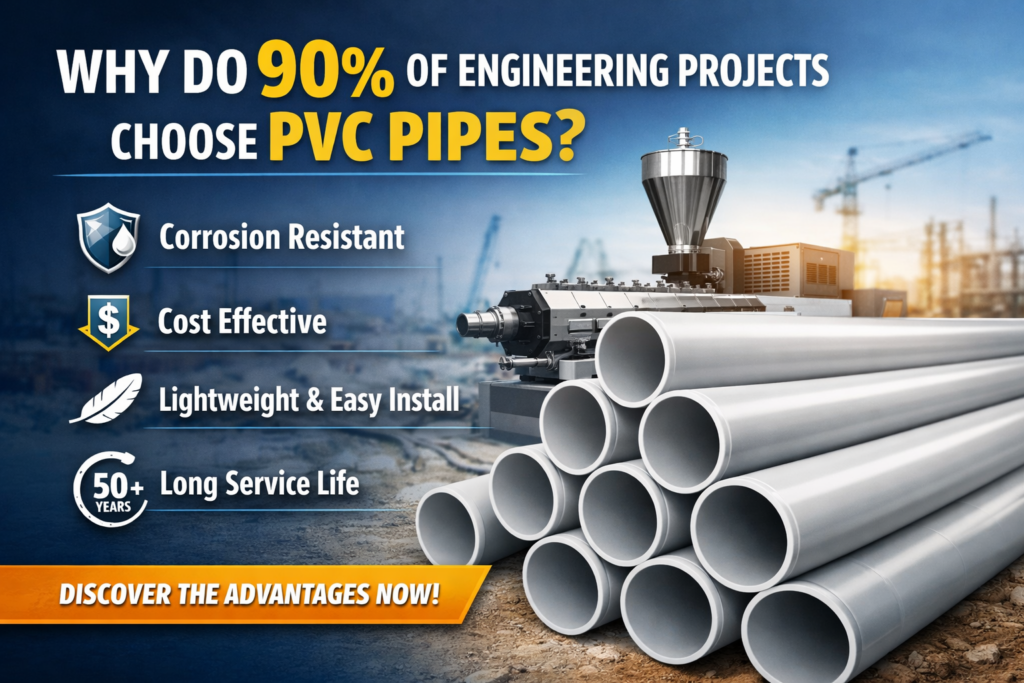
Introduction: Are You Still Struggling with Pipe Selection? The Complete Guide for Buyers.
When selecting piping materials for construction, municipal, or industrial projects, buyers often face the same challenges:
- Corrosion in metal pipes
- High material and installation costs
- Complex maintenance requirements
- Limited service life
If you are dealing with any of these issues, it’s time to consider a more efficient and cost-effective solution — PVC pipes.
In recent years, PVC pipe has become one of the most widely used materials in global infrastructure projects. But why is it so popular? And is it the right choice for your application?
This guide will give you a complete understanding of PVC pipe advantages, applications, comparisons, and how to choose the right supplier.
What is PVC Pipe?
PVC (Polyvinyl Chloride) pipe is a type of plastic pipe widely used in fluid transportation systems. It is made from polymerized vinyl chloride monomer and is known for its durability, chemical resistance, and affordability.
There are two main types of PVC pipes:
- uPVC (Unplasticized PVC) – rigid, commonly used for water supply and drainage
- PVC (Flexible) – used in special applications requiring flexibility
Why PVC Pipes Are the Preferred Solution
1. Excellent Corrosion Resistance
Unlike steel or iron pipes, PVC pipes do not rust, corrode, or degrade when exposed to chemicals, moisture, or soil conditions.
This makes PVC an ideal choice for:
- Underground piping systems
- Chemical transportation
- Coastal and humid environments
2. Cost-Effective Material
One of the biggest advantages of PVC pipe is its low cost.
Compared to traditional materials:
- Lower raw material cost
- Reduced transportation cost (lightweight)
- Lower installation labor cost
👉 This makes PVC pipe a top choice for large-scale infrastructure projects.
3. Lightweight and Easy Installation
PVC pipes are significantly lighter than metal pipes, making them easier to transport, handle, and install.
Benefits include:
- Faster installation
- Reduced labor requirements
- Lower risk of damage during handling
4. Long Service Life
PVC pipes can last up to 50 years or more under normal conditions.
They are resistant to:
- Chemical reactions
- Biological growth
- Environmental degradation
5. Smooth Inner Surface for Better Flow
PVC pipes have a smooth internal wall, which reduces friction and improves flow efficiency.
This leads to:
- Lower energy consumption
- Reduced pressure loss
- Improved system performance
Common Applications of PVC Pipes
PVC pipes are used across a wide range of industries:
1. Construction Industry
- Water supply systems
- Drainage systems
- Electrical conduit pipes
2. Municipal Engineering
- Sewage systems
- Stormwater drainage
- Urban water distribution
3. Agricultural Irrigation
- Irrigation pipelines
- Water transport systems
4. Industrial Applications
- Chemical processing
- Wastewater discharge
- Ventilation systems
PVC vs Other Pipe Materials
PVC vs PE Pipes
| Feature | PVC Pipe | PE Pipe |
| Rigidity | High | Flexible |
| Cost | Lower | Higher |
| Installation | Easy | Moderate |
| Pressure Resistance | Good | Excellent |
| Application | Water supply, drainage | Gas, flexible systems |
👉 Conclusion: PVC is ideal for rigid systems and cost-sensitive projects.
PVC vs Metal Pipes
| Feature | PVC Pipe | Metal Pipe |
| Corrosion Resistance | Excellent | Poor |
| Weight | Light | Heavy |
| Cost | Low | High |
| Maintenance | Minimal | High |
👉 Conclusion: PVC is a more economical and durable solution.
How to Choose High-Quality PVC Pipes
When sourcing PVC pipes, quality is critical. Here are key factors to consider:
1. Raw Materials
High-quality PVC resin ensures durability and performance.
2. Manufacturing Process
Advanced PVC pipe extrusion technology guarantees consistent quality.
3. Standards and Certifications
Look for compliance with:
- ISO standards
- ASTM standards
- Local certification requirements
The Role of PVC Pipe Manufacturing Equipment
Behind every high-quality PVC pipe is a reliable production line.
A typical PVC pipe production line includes:
- Extruder (single or twin screw)
- Mold
- Vacuum calibration tank
- Haul-off machine
- Cutting machine
Why Equipment Matters
- Determines pipe precision
- Affects surface quality
- Impacts production efficiency
- Ensures long-term durability
👉 Choosing the right PVC pipe extrusion machine is just as important as choosing the material itself.
Common Problems and Solutions in PVC Pipe Production
Problem 1: Uneven Pipe Thickness
Cause: Poor temperature control or unstable extrusion
Solution: Use high-quality extrusion equipment
Problem 2: Surface Roughness
Cause: Low-quality raw materials or mold issues
Solution: Optimize formulation and mold design
Problem 3: Low Production Efficiency
Cause: Outdated machinery
Solution: Upgrade to modern automated production lines
How to Choose the Right PVC Pipe Production Line
If you are a manufacturer, selecting the right equipment is crucial.
Consider the following:
- Pipe diameter range
- Production capacity
- Automation level
- Energy efficiency
- After-sales support
👉 A well-designed production line can significantly improve your competitiveness.
Conclusion: Is PVC Pipe the Right Choice for You?
PVC pipe has proven to be one of the most reliable, cost-effective, and versatile piping solutions available today.
Whether you are:
- A contractor
- A distributor
- A manufacturer
Understanding PVC pipe advantages, applications, and production technology will help you make better decisions and stay competitive in the market.
Call to Action
If you are looking for:
- High-quality PVC pipe production lines
- Reliable extrusion technology
- Professional technical support
Feel free to reach out and discuss your project requirements.
We are here to help you build efficient, durable, and cost-effective PVC pipe solutions.