

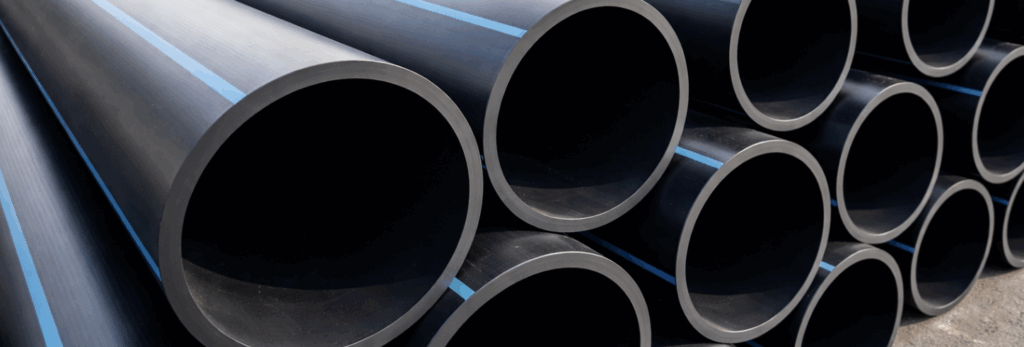
With the continuous development of global infrastructure, municipal engineering, agricultural irrigation, gas transportation, and industrial pipeline systems, HDPE pipes (High Density Polyethylene pipes) have become one of the fastest-growing and most widely used plastic pipe products worldwide. For pipe manufacturers, fully understanding the HDPE pipe manufacturing process and selecting a stable, efficient, and cost-effective HDPE pipe extrusion line is the key to gaining market share and achieving long-term profitability.
This article provides a comprehensive and professional explanation of the HDPE pipe production process, from raw material preparation to finished pipe output. Based on the extensive project experience of Wanplas Group, we also introduce different HDPE pipe extrusion line solutions, including small- and large-diameter systems, and explain how advanced equipment can help manufacturers achieve high efficiency, high product quality, excellent cost performance, and fast return on investment (ROI).
1. Overview of HDPE Pipes and Market Trends
HDPE (High Density Polyethylene) is a thermoplastic material with high crystallinity, excellent mechanical strength, and outstanding chemical resistance. HDPE pipes are gradually replacing traditional metal and concrete pipes due to their superior overall performance.
Key advantages of HDPE pipes include:
- Excellent corrosion resistance, suitable for harsh environments
- Long service life, typically over 50 years under normal conditions
- High flexibility and impact resistance, ideal for areas with ground movement
- Reliable jointing methods, such as butt fusion and electrofusion
- Lower total lifecycle cost, including installation and maintenance
Because of these advantages, HDPE pipes are widely used in water supply and drainage, gas distribution, agricultural irrigation, cable protection, mining, and marine engineering. This growing demand is driving HDPE pipe extrusion lines toward larger diameters, higher automation, and higher output efficiency.
2. HDPE Pipe Manufacturing Process – Step by Step
A high-quality HDPE pipe can only be produced through a stable, well-designed, and highly automated production process. Below is a detailed explanation of the standard HDPE pipe manufacturing process.
2.1 Raw Material Selection and Formulation
HDPE pipe production typically uses pipe-grade HDPE resin. Depending on the application, additives such as color masterbatch, antioxidants, and UV stabilizers may be added.
Raw material quality directly determines the mechanical strength, durability, and service life of the finished pipe. When designing HDPE pipe extrusion solutions, Wanplas Group assists customers in selecting suitable raw materials and formulations according to international standards such as ISO, EN, and ASTM, ensuring consistent and reliable pipe performance.
2.2 Material Conveying and Drying System
HDPE granules are transferred to the extruder hopper via an automatic conveying system. Before extrusion, drying is essential to remove moisture and prevent defects such as bubbles or surface streaks.
Modern HDPE pipe extrusion lines commonly adopt centralized automatic feeding systems, which reduce labor costs while improving production stability and consistency.
2.3 HDPE Pipe Extrusion (Core Process)
Extrusion is the core stage of HDPE pipe manufacturing and has the greatest impact on output, energy consumption, and product quality.
Inside the extruder, HDPE material is heated, plasticized, and homogenized. A high-performance screw then continuously and steadily pushes the molten material into the pipe die, where the pipe’s outer diameter and wall thickness are precisely formed.
Wanplas Group provides HDPE pipe extrusion solutions covering a wide diameter range, including:
- 800mm hdpe pipe extrusion line, designed for municipal water supply, drainage systems, and large-scale infrastructure projects, featuring high stability and continuous high output
- High-speed small and medium diameter extrusion solutions for standard pipe production
By optimizing screw design, temperature control systems, and die flow channels, Wanplas Group’s HDPE pipe extrusion lines achieve higher productivity with lower energy consumption, while maintaining excellent dimensional accuracy.
2.4 Vacuum Calibration and Cooling System
The extruded HDPE pipe exits the die in a high-temperature, soft state and must immediately enter the vacuum calibration tank for shaping and cooling.
This stage is responsible for:
- Accurate control of the pipe’s outer diameter
- Rapid and stable shaping to prevent deformation
- Improving surface smoothness and appearance
Wanplas Group uses multi-stage vacuum calibration and spray cooling designs, allowing precise adjustment for different pipe diameters and wall thicknesses to ensure stable dimensions and high-quality surfaces.
2.5 Haul-Off (Pulling) System
After cooling, the pipe is continuously pulled forward by a belt-type or caterpillar-type haul-off machine. The haul-off speed must be perfectly synchronized with the extrusion output to ensure uniform wall thickness.
A high-quality haul-off system offers smooth operation, precise speed control, and no surface damage, which is essential for achieving a high finished-product qualification rate.
2.6 Cutting and Socketing (Optional)
According to market requirements, HDPE pipes can be cut to fixed lengths or processed with online socketing.
- Chip-free cutting ensures clean and flat pipe ends
- Socketing processes improve installation efficiency in the field
Wanplas Group can configure cutting and socketing systems flexibly based on customer product specifications and target markets.
2.7 Inspection, Packaging, and Storage
Finished HDPE pipes undergo visual inspection, dimensional checks, and, when required, mechanical performance testing. Qualified pipes are then stacked, packaged, and prepared for storage or shipment.
3. HDPE Pipe Extrusion Line Solutions by Diameter Range
3.1 Small and Medium Diameter HDPE Pipe Production Lines (20–63mm)
HDPE pipes in the 20–63mm range are widely used for water supply, agricultural irrigation, and cable protection, with stable and high-volume market demand.
As an experienced 20-63mm hdpe pipe extrusion line manufacturer, Wanplas Group provides mature, high-speed production solutions featuring:
- High output efficiency per hour
- Low energy consumption and operating cost
- Fast size changeover for multiple pipe specifications
- Relatively low initial investment and quick payback period
3.2 Large Diameter HDPE Pipe Extrusion Lines
For municipal and large-scale infrastructure projects, 800mm hdpe pipe extrusion line solutions require exceptional machine stability, precision die design, and advanced control systems.
Wanplas Group has extensive experience in large-diameter HDPE pipe projects and offers one-stop services covering system design, equipment manufacturing, installation, and commissioning to ensure long-term stable operation.
4. Core Advantages of Wanplas Group HDPE Pipe Extrusion Lines
In a highly competitive equipment market, choosing the right supplier directly impacts project success.
Wanplas Group specializes in the R&D and manufacturing of plastic pipe extrusion equipment and consistently adheres to the principles of high efficiency, high quality, and high cost performance, helping customers achieve sustainable profitability.
Key advantages include:
- High Production Efficiency – Optimized screw design and advanced automation significantly increase output
- High Equipment Quality – Strict manufacturing and assembly standards ensure long-term stable operation
- Excellent Cost Performance – Rational system configuration avoids unnecessary investment
- Fast Return on Investment – Reliable equipment with low downtime shortens the payback period
- Comprehensive Service Support – Installation, commissioning, operator training, and long-term after-sales service
5. Start Your HDPE Pipe Project Today
Ready to Launch or Upgrade Your HDPE Pipe Production?
Whether you are planning to build a new HDPE pipe factory or upgrade an existing extrusion line to increase output and product quality, choosing the right HDPE pipe extrusion line is the key to fast and sustainable profitability.
Wanplas Group can customize a complete HDPE pipe extrusion solution based on your:
- Target pipe diameter range (20–63mm or up to 800mm and above)
- Expected production capacity and market positioning
- Investment budget and ROI requirements
📩 Contact Wanplas Group today to receive:
- A customized HDPE pipe extrusion line technical proposal
- Detailed equipment configuration and reference pricing
- Project investment analysis and payback estimation
Partner with Wanplas Group to build a reliable, efficient, and profitable HDPE pipe production system and gain a strong competitive advantage in the global market.