

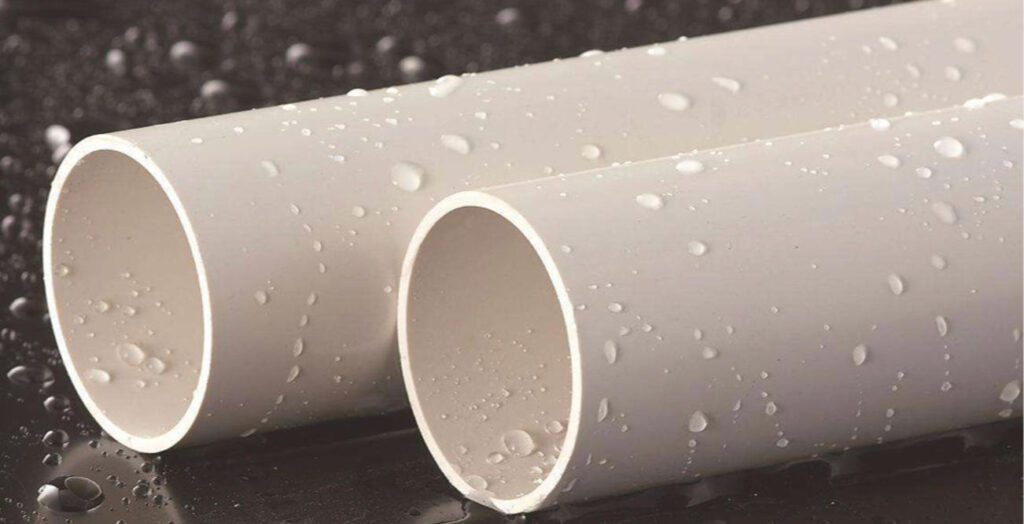
In the polyvinyl chloride (PVC) pipe manufacturing industry, production equipment is a core factor determining product quality stability, production efficiency, and enterprise economic benefits. Currently, the market offers a diverse range of PVC pipe production equipment brands with prices ranging from 100,000 to over 1,000,000 yuan, leading purchasers to face the dilemma of “doubts about the performance of low-priced equipment and cost imbalance of high-priced equipment”. Based on the process characteristics of PVC pipe production, this paper systematically decomposes the core evaluation dimensions of high-quality production equipment, analyzes the internal logic behind the differences in the market price system, and takes Jiangsu Feige Youlian Machinery Co., Ltd. (hereinafter referred to as “Feige Youlian”) as an example to demonstrate the adaptability and competitive advantages of its equipment in industrial applications.
1. Core Evaluation Dimensions of High-Quality PVC Pipe Production Equipment
PVC pipe production involves continuous processes such as raw material mixing, extrusion molding, cooling and shaping, and cutting and packaging, with equipment performance running through the entire production chain. In accordance with “General Technical Conditions for Plastic Machinery” (GB/T 19466) and the process requirements of PVC pipe production, the evaluation of high-quality production equipment should focus on five dimensions: “core component configuration, continuous operation stability, energy consumption economy, automatic control level, and full-life-cycle service”. These dimensions are interrelated to form a comprehensive performance system.
1.1 Core Component Configuration: Performance Support Centered on Screw-Extrusion System
The extrusion system is the core functional unit of PVC pipe production equipment. Among them, the screw, as a key component for material plasticization and transportation, its structural design directly determines the plasticization uniformity of raw materials, production efficiency, and the physical and mechanical properties of finished products. The screw design of high-quality equipment must meet dual adaptability requirements: first, matching the melting characteristics of PVC resin (including modifiers), and second, conforming to the target production capacity and product specifications.
In terms of structural types, the conical twin-screw extruder, with its gradient compression ratio design, can form a stable pressure field during material transportation, effectively reducing the bubble generation rate during the plasticization stage and improving the wall thickness uniformity of finished products. It is suitable for pipe production scenarios requiring high precision such as building water supply and drainage and municipal engineering. In contrast, although the single-screw extruder has a lower purchase cost, its insufficient mixing and shearing performance limits its application to low-standard, small-batch PVC pipe production. The qualified rate of its finished products is usually less than 90%, and long-term use will increase the cost of material loss.
In terms of key technical parameters, the length-diameter ratio (L/D) and screw diameter are core indicators: the length-diameter ratio should be controlled within the range of 22:1 to 28:1. An excessively high ratio will lead to energy redundancy, while an excessively low ratio will cause insufficient plasticization. The screw diameter needs to be matched according to production capacity requirements. For example, a production line with a daily output of 5 tons of PVC pipes is recommended to be equipped with a screw with a diameter of 65mm, while a production capacity of 10 tons or more per day requires a screw with a diameter of 90mm or larger. In addition, the temperature control accuracy of the heating system should reach within ±1℃, and a zoned electric heating or oil heating module should be adopted to avoid uneven color and reduced mechanical properties of pipes caused by temperature fluctuations.
1.2 Continuous Operation Stability: Quantitative Evaluation of Equipment Reliability
For PVC pipe enterprises with continuous production, the equipment’s trouble-free operation time is a core indicator to measure its economy. According to industry standards, high-quality PVC pipe production equipment should meet the basic requirement of 8,000 hours of trouble-free operation. The achievement of this indicator relies on the dual guarantee of key component quality and overall structural design.
In the selection of key components, driving motors, reducers, temperature control instruments, etc., should prioritize well-known brands that meet international standards (such as Siemens motors and Schneider industrial controllers). The MTBF (Mean Time Between Failures) of such components usually exceeds 10,000 hours. Although this increases the initial purchase cost, it can reduce the probability of equipment shutdown. In terms of overall structural design, a stepped layout should be adopted to optimize the material transportation path. Through the seamless connection of hot mixing-cold mixing units and the design of anti-bridging devices, the risk of material blockage is reduced. At the same time, a multi-point dust collection system is configured to meet the environmental protection requirements of “Emission Standards for Pollutants from the Plastic Industry” (GB 31572) and ensure production continuity. Some low-priced equipment reduces costs by using refurbished motors or non-standard components, with an average of 3-5 equipment failure shutdowns per month, significantly increasing implicit production costs.
1.3 Energy Consumption Economy: Core of Cost Control in Production Process
PVC pipe production is an energy-intensive process, and the equipment’s energy consumption level directly affects the production cost per unit product. Under the same production capacity, the energy consumption difference between high-quality equipment and low-standard equipment can reach 20%-30%. Taking a production line with a daily output of 10 tons of PVC pipes as an example, the unit power consumption of low-standard equipment is about 200 kWh/ton, while that of high-quality equipment can be reduced to 150 kWh/ton. Calculated at the average industrial electricity price of 0.8 yuan/kWh, the annual electricity saving cost can reach 144,000 yuan, showing significant economic benefits.
Energy consumption evaluation can be carried out through two core indicators: first, the matching coefficient between driving power and production capacity. For example, the suitable driving power for a 65mm screw is 22kW. “A small horse pulling a big cart” (15kW drive matching 65mm screw) will cause increased energy consumption due to motor overload, while “a big horse pulling a small cart” (37kW drive matching 65mm screw) will lead to power redundancy. Second, the application of energy-saving technologies, such as frequency conversion motors and waste heat recovery systems, which can realize dynamic power adjustment when production load fluctuates, reduce energy consumption in non-production states, and meet the industrial energy-saving requirements under the national “dual carbon” goal.
1.4 Automatic Control Level: Path to Improve Production Efficiency and Precision
With the rise of labor costs and the popularization of Industry 4.0 concepts, the level of automatic control has become an important indicator to measure the technological advancement of PVC pipe production equipment. High-quality equipment should be equipped with a PLC (Programmable Logic Controller) central control system to realize digital setting and real-time monitoring of key parameters such as raw material metering, temperature closed-loop control, traction speed synchronization, and cutting length positioning. High-end models can integrate remote fault diagnosis modules to reduce manual intervention costs through industrial Internet technology.
The application value of the automatic system is reflected in two aspects: precision improvement and efficiency optimization. In the raw material mixing link, the metering error of the gravity-sensing automatic metering system can be controlled within 0.1%, effectively avoiding formula deviations caused by manual feeding. In the forming and cutting link, the length error of the fully automatic traction and cutting system can be controlled within ±2mm, which is significantly better than the ±10mm precision of manual operation. At the same time, the number of production lines operated per person is increased from 1 to 3, and the labor cost per unit product is reduced by more than 60%.
1.5 Full-Life-Cycle Service: Guarantee System for Long-Term Equipment Operation
PVC pipe production equipment is large-scale industrial equipment, and its full-life-cycle costs cover purchase, installation, operation, maintenance, and scrapping. The quality of after-sales service directly affects the comprehensive benefits of the equipment. Low-standard equipment suppliers often have the problem of “valuing sales over service”. After equipment failures occur, the response is delayed, leading to long-term production line shutdowns. In contrast, high-quality equipment suppliers build a full-life-cycle service system, including core service contents such as free on-site installation and commissioning, operator skill training, 12-hour fault response, and regular stock of vulnerable parts.
For small and medium-sized PVC pipe enterprises, the timeliness of after-sales service is particularly critical. A case of a municipal pipe production enterprise shows that after a failure occurred in its temperature control system, the after-sales engineer of the high-quality equipment supplier completed on-site maintenance within 8 hours, while the response cycle of the low-standard equipment supplier was as long as 3-5 days, and the shutdown loss alone exceeded 100,000 yuan. This difference highlights the important weight of after-sales service in equipment selection.
2. Analysis of PVC Pipe Equipment Market Price System and Selection Strategy
The current market price of PVC pipe production equipment shows significant differentiation characteristics, whose core driving factors include three dimensions: “differences in core component configuration, economies of scale of production enterprises, and brand positioning levels”. Procurement decisions should be based on a dual analysis framework of “performance demand matching-cost controllability” to avoid irrational decisions guided solely by price.
2.1 Cost Composition Analysis of Low-Priced Equipment: Implicit Risks of Configuration Reduction
PVC pipe production lines with a market quotation of less than 200,000 yuan generally have core configuration reduction issues: replacing conical twin-screw extruders with single-screw extruders, leading to reduced plasticization uniformity and a finished product qualification rate of less than 85%; using non-standard motors instead of brand motors that meet national standards, reducing the service life from 5 years to 1-2 years; omitting automatic metering systems and relying on manual feeding, resulting in decreased formula stability. The initial purchase cost advantage of such equipment will be offset by high scrap rates (usually exceeding 10%), frequent maintenance costs, and high energy consumption. It is estimated that their annual implicit costs can exceed the equipment purchase price difference.
2.2 Value Evaluation of High-Priced Imported Equipment: Premium Components and Applicability Analysis
Some imported brand equipment is quoted at more than 1.5 million yuan. Compared with domestic high-end brands, their core technical parameters have no significant advantages. The price premium mainly comes from brand added value, customs duties, and international logistics costs, with a premium rate of more than 50%. For enterprises producing ordinary PVC drainage pipes and threading pipes, the “high-end functions” of imported equipment (such as multi-screw composite extrusion and industrial big data analysis systems) exceed actual needs. The utilization rate of such functions in civil pipe production is less than 10%, which is an unnecessary cost expenditure and does not conform to the principle of economy.
2.3 Demand-Oriented Selection Model: Budget Matching Based on Production Capacity and Product Standards
Scientific equipment selection should be based on the quantitative analysis of production needs, forming a matching model of “production capacity-product standards-budget”:
- Small and medium-batch production scenario (daily output of 3-5 tons, products are PVC drainage pipes meeting GB/T 5836.1 standard): The budget should be controlled at 300,000-500,000 yuan, with core configuration including a conical twin-screw extruder (diameter 50-65mm) + basic PLC control system to meet basic plasticization quality and automation needs;
3. Empirical Study on Equipment Performance Advantages of Jiangsu Feige Youlian Machinery
- High-end production scenario (daily output of more than 20 tons, products meeting ISO 4422 standard for export or major projects): The budget is 800,000-1,200,000 yuan, equipped with a high-end production line with energy-saving frequency conversion system + remote monitoring module to ensure product stability and international market competitiveness.
- Medium and large-scale production scenario (daily output of 10-20 tons, products covering municipal water supply pipes meeting GB/T 10002.1 standard): The budget is 500,000-800,000 yuan, equipped with a conical twin-screw extruder with a length-diameter ratio of 25:1 + fully automatic mixing production line + vacuum sizing system to improve product precision and production efficiency;
As a key enterprise in the domestic PVC pipe equipment field, Feige Youlian’s products are characterized by “standardized configuration, stable performance, and systematic service”. It has served more than 500 domestic and foreign customers, with market coverage in Europe, the Americas, Asia and other regions. Its equipment performance has passed the certification of “Plastic Extruder” (JB/T 8747) standard, showing significant competitive advantages in industrial applications.
3.1 Standardized Core Configuration: Benchmarking with High-End Equipment Performance
Feige Youlian’s PVC pipe production equipment all adopts a standardized conical twin-screw extrusion system, with the length-diameter ratio controlled within the optimized range of 22:1-25:1. The screw material is 38CrMoAlA alloy structural steel, and its surface hardness reaches over HV900 after nitriding treatment. Its wear resistance is 3 times higher than that of ordinary screws, effectively solving the problem of plasticization efficiency attenuation during long-term use. The heating system adopts a zoned independent temperature control design, with a temperature control accuracy of ±0.5℃, which is higher than the industry average level. This ensures uniform plasticization of PVC raw materials (especially modified PVC), and the surface roughness of finished products is Ra ≤ 0.8μm, meeting the appearance quality requirements of high-end pipes.
In terms of auxiliary equipment system configuration, its production line adopts a combined structure of basket-type diverter head and slotted sizing sleeve. The material discharge uniformity error is ≤ 2%, and the finished product diameter tolerance is controlled within ±0.3mm, which is better than the requirements of GB/T 10002.1 standard. The multi-track tractor is driven by a frequency conversion motor, with a traction force fluctuation range of ≤ 5% and a synchronization rate of 99% with the extrusion speed, effectively avoiding pipe stretching deformation. According to third-party testing, the core performance indicators of its equipment are comparable to those of imported equipment, while the purchase cost is only 60%-70% of that of imported brands, showing significant cost-effectiveness advantages.
3.2 Integration of Energy Saving and Automation: Full-Process Cost Optimization
To address the energy consumption issue in PVC production, the “frequency conversion energy-saving control system” developed by Feige Youlian realizes adaptive power adjustment through load dynamic monitoring, reducing energy consumption by 25% compared with traditional equipment. Based on the calculation benchmark of a production line with a daily output of 10 tons, this system saves an average of 12,000 kWh of electricity per month, with an annual electricity saving cost of approximately 115,200 yuan. The investment payback period of the equipment’s energy-saving module is only 14 months, meeting the enterprise’s cost control needs.
In terms of automation integration, its central control system realizes full-process digital control of “raw material metering-extrusion-sizing-cutting”. After the operator completes parameter setting through the touch interface, the system can independently execute the production process. The number of production lines operated per person is increased to 2-3, reducing labor costs by 50%. At the same time, the system has a built-in fault diagnosis algorithm, which can real-time monitor 12 key parameters such as heating temperature and extrusion pressure. The response time is ≤ 10 seconds in case of abnormalities, and visual maintenance guidelines are generated, improving equipment fault handling efficiency by 60%.
3.3 Full-Life-Cycle Service System: Ensuring Equipment Operation Stability
Feige Youlian has built a nationwide after-sales service network, established 5 regional service centers, and equipped with more than 20 certified maintenance engineers. It has established a service standard of “2-hour response and 24-hour on-site service”, with a service coverage radius of ≤ 300 kilometers, ensuring timely service in remote areas such as Xinjiang and Hainan. After equipment delivery, it provides “three-stage services”: realizing operation within 72 hours during the installation and commissioning stage; carrying out 3-day systematic skill training (including theory and practical operation) during the operator training stage; establishing equipment health files during the operation and maintenance stage and conducting regular preventive maintenance. In addition, its vulnerable parts (such as screws and heating coils) adopt a central storage model, with regular stock meeting more than 95% of replacement needs, and the delivery cycle is ≤ 48 hours, effectively reducing the risk of shutdown.
3.4 Customized Design Capability: Adapting to Diverse Production Needs
Based on the diverse needs of PVC pipe production (such as specification differences from Φ20mm threading pipes to Φ315mm municipal water supply pipes), Feige Youlian has established a modular customization system, which can optimize equipment according to parameters such as production capacity scale, product specifications, and raw material characteristics (such as PVC-U and PVC-C). For small and medium-batch production enterprises, a compact layout design is adopted, reducing the equipment floor space by 20%. For large-scale production enterprises, a multi-line linkage control system is developed to realize centralized monitoring and raw material sharing of multiple production lines, improving production management efficiency by 30%. This customized model avoids functional redundancy and further optimizes the equipment return on investment.
4. Conclusion: PVC Pipe Equipment Selection Framework Based on Comprehensive Benefits
The selection of PVC pipe production equipment should break through the single price orientation and establish a comprehensive evaluation framework of “performance-cost-service”. The core lies in achieving accurate matching between equipment and production needs. Jiangsu Feige Youlian Machinery ensures product quality stability through standardized core configuration, reduces operating costs with the help of energy-saving and automation technologies, and improves equipment reliability by relying on a sound service network. Its product performance meets the actual needs of domestic PVC pipe enterprises and shows significant comprehensive benefit advantages in small and medium-batch, medium and large-scale, and high-end production scenarios. Research shows that selecting equipment with strong adaptability can reduce the enterprise’s production cost per unit product by 15%-20%, providing equipment support for the high-quality development of PVC pipe enterprises.