

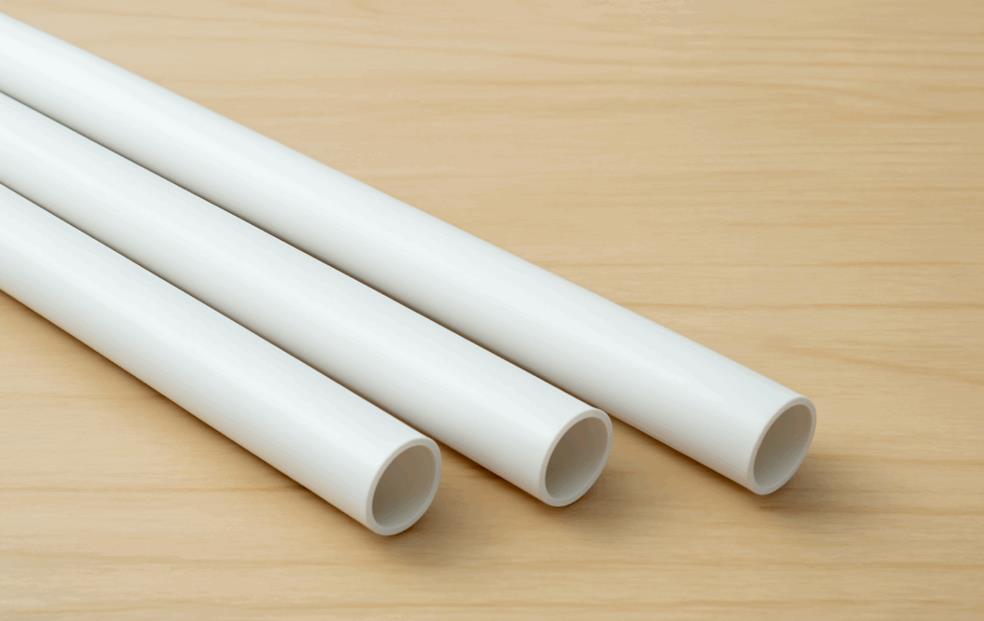
PVC pipes (Polyvinyl Chloride pipes) are widely used in various industries due to their corrosion resistance, high pressure tolerance, ease of installation, and low cost. From municipal engineering to construction projects, agricultural irrigation, and home water systems, PVC pipes are indispensable. But have you ever wondered how these pipes are made? Today, Wanplas Group will take you through the production process of PVC pipes, giving you an in-depth understanding of how we manufacture high-quality pipes with advanced technology.
PVC Pipe Production Process
The production of PVC pipes is not an instant process; it involves several precise steps. Each stage needs to be carefully controlled to ensure the final product’s quality. Below are the key steps in the production of PVC pipes:
1. Raw Material Preparation and Blending
The core raw material for PVC pipes is polyvinyl chloride (PVC) resin, which is a colorless, odorless, and non-toxic solid. To improve the pipe’s durability and processing performance, the PVC resin needs to be blended with various additives, stabilizers, plasticizers, and modification agents. The ratio of these materials must be carefully calculated to ensure the final product has optimal performance.
At Wanplas Group, we use high-quality raw materials and an automated batching system to ensure that every batch of material meets the production standards. This stage is fundamental to ensuring that the PVC pipes perform consistently during use.
2. Extrusion Molding
After the material is blended, it enters the core process of the production—extrusion molding. In this step, the blended PVC material is fed into an extruder, where it is heated to a molten state and pushed through a screw mechanism. The molten PVC is then extruded into a mold, where it cools and solidifies into the shape of a pipe.
The screw in the extruder controls the speed and temperature of the material, ensuring the PVC flows evenly and forms consistently. The pipe produced during this stage is still soft and hot and needs further cooling and shaping.
At Wanplas Group, we use advanced extrusion technology to ensure that no air bubbles or impurities are present during the extrusion process, guaranteeing smooth, flawless inner and outer pipe surfaces that meet production standards.
3. Cooling and Shaping
After extrusion, the PVC pipe needs to be cooled to stabilize its shape. During this stage, the pipe passes through a water-cooling bath, where it is rapidly cooled to harden and stabilize its final shape. The cooling time and temperature must be precisely controlled, as improper cooling can lead to dimensional deviations.
After cooling, the pipe undergoes a stretching process, which further ensures its straightness and appearance. This process guarantees that the pipe is fully shaped and meets the required standards.
At Wanplas Group, we utilize a multi-stage water-cooling system to ensure the pipes are evenly cooled, reducing the risk of deformation due to temperature differences.
4. Quality Control and Testing
To ensure that each PVC pipe meets domestic and international standards, Wanplas Group implements a stringent quality control system. Every pipe is subject to multiple tests before leaving the factory to ensure it can withstand the necessary pressure and stress during use. The testing includes, but is not limited to:
Outer diameter and wall thickness testing: Using high-precision measurement tools, we ensure the pipe’s outer diameter and wall thickness meet standards, preventing risks due to non-compliance.
Pressure resistance testing: Pipes are tested under simulated high-pressure conditions to ensure they will not break or deform under pressure.
Heat stability testing: We test the pipes’ performance under high temperatures to ensure they can be used in high-temperature environments without distortion or failure.
Flexibility testing: We ensure the pipe can withstand certain bending angles without breaking, ensuring adequate flexibility.
In addition, we conduct rigorous aging tests to ensure the pipes’ longevity meets customer expectations.
5. Cutting and Packaging
After passing the quality control tests, the PVC pipes enter the cutting stage. Depending on customer requirements, the pipes are cut into various lengths for different applications. After cutting, the pipes undergo one last inspection to ensure they are free from defects such as damage or scratches.
After cutting, the pipes are carefully packaged. To ensure safe transportation, Wanplas Group uses high-strength, wear-resistant packaging materials. Our packaging design also takes into account the stacking method during transportation, ensuring the pipes arrive safely at their destination.
6. Shipping and After-Sales Service
Once the packaging is complete, the pipes are sent to the logistics center for shipping. We work with multiple international logistics companies to ensure that the pipes are delivered on time and safely to customers worldwide.
Wanplas Group is committed to customer satisfaction, offering comprehensive after-sales support. Whether you need assistance during installation or maintenance after use, our professional team is always ready to provide technical support to ensure that our pipes perform well for years to come.
Why Choose Wanplas Group?
Since its establishment, Wanplas Group has been dedicated to providing high-quality plastic pipe production equipment and technical solutions. As a leading supplier of PVC pipe production lines, we offer efficient and reliable equipment to customers worldwide. Our advantages lie not only in the performance of our equipment but also in the comprehensive services we provide to our customers.
1. Efficient Production Lines
Wanplas Group’s PVC pipe production lines use globally leading extrusion technology to ensure an efficient and stable production process. Whether you need standard pipes or customized solutions, our equipment can meet the various needs of our customers, offering high production efficiency that helps reduce manufacturing costs.
2. Excellent Craftsmanship and Technology
Our production equipment uses the most advanced control systems to ensure that each pipe meets the highest quality standards. In addition, Wanplas Group continuously innovates and invests in research and development to ensure that our equipment remains at the forefront of the industry.
3. Comprehensive Technical Support
From equipment selection and production debugging to after-sales maintenance, Wanplas Group offers comprehensive technical support. Our team of experienced engineers provides customized solutions, ensuring that the equipment runs efficiently and meets all customer needs.
4. Outstanding After-Sales Service
Our after-sales service covers the globe. No matter where you are, Wanplas Group is always available to provide timely support and assistance. We regularly follow up with customers to ensure that our equipment runs smoothly and meets the expected performance.
Conclusion
PVC pipes are a crucial material used in infrastructure projects across the globe. The production process involves multiple stages that require precise operations. From raw material preparation to final product shipping, every step is essential to ensuring the high quality of the final product. Wanplas Group, with its advanced technology, strict quality control, and comprehensive after-sales services, is committed to providing customers with high-quality PVC pipe production equipment. If you are interested in learning more about our solutions or have any inquiries, feel free to visit our website for more information. We are here to serve you!