

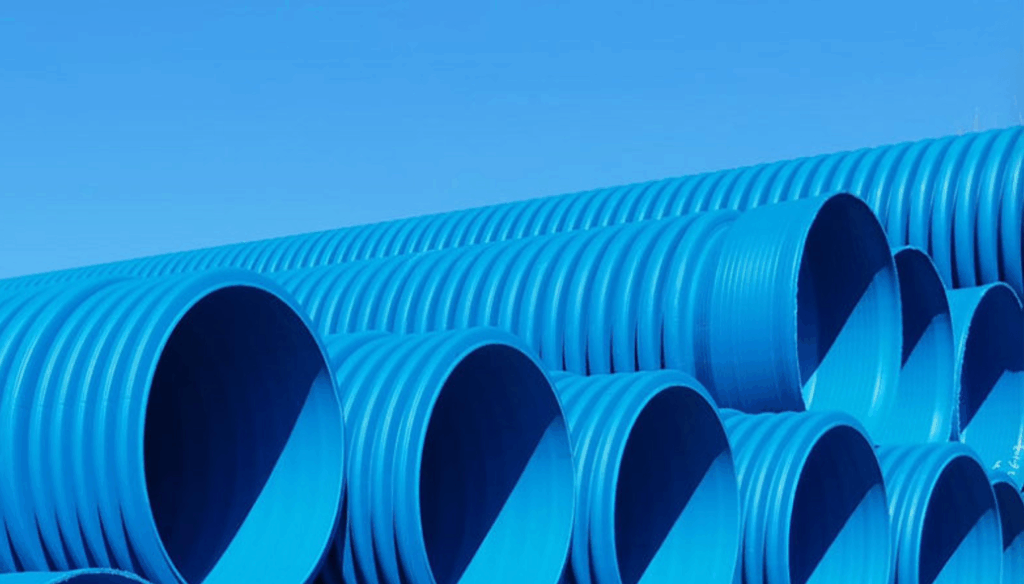
High-Density Polyethylene (HDPE) pipes have become core components in water supply and drainage engineering, gas transmission systems, municipal infrastructure, and industrial sewage treatment due to their superior performance. However, the diverse product categories and wide dimensional specifications pose challenges for precise selection based on engineering needs. Taking Wanplas, a world-leading plastic pipe solution provider, as the research object, this paper constructs a three-dimensional selection logic of “scene adaptation – performance matching – quality guarantee”. It systematically analyzes the technical characteristics, advantages, disadvantages, and applicable scenarios of HDPE pipes with different sizes (small, medium, and large) and explores the core value of Wanplas in standardized selection and high-quality application. The research shows that Wanplas’ full-range product matrix, full-life cycle quality control, and comprehensive technical services effectively ensure the scientificity and reliability of HDPE pipe selection, providing valuable references for engineering practice.
Keywords: HDPE pipes; Precision selection; Dimensional characteristics; Wanplas brand; Quality control
High-Density Polyethylene (HDPE) pipes have become core pipes in fields such as water supply and drainage engineering, gas transmission systems, municipal infrastructure construction, and industrial sewage treatment due to their excellent corrosion resistance, impact resistance, environmental friendliness, non-toxicity, and long service life. However, the current market is flooded with a wide variety of HDPE pipe products with a large span of dimensional specifications. How to achieve precise selection based on engineering needs has become a key issue restricting the improvement of engineering quality and cost optimization. As a world-leading provider of plastic pipe solutions, Wanplas has built a full-chain service model of “demand matching – performance adaptation – quality guarantee” relying on a sound quality control system, comprehensive technical support capabilities, and a full-range product matrix. Taking Wanplas’ product system as the research carrier, this paper systematically analyzes the scientific selection logic of HDPE pipes, explores the technical characteristics, advantages, disadvantages and applicable scenarios of HDPE pipes of different dimensional specifications, and in-depth excavates the core value of Wanplas brand in promoting the standardized selection and high-quality application of HDPE pipes.
1. Construction of Scientific Selection Logic for HDPE Pipes
The selection of HDPE pipes is not a simple dimensional matching, but needs to establish a three-dimensional selection logic based on “scene adaptation as the premise, performance matching as the core, and quality guarantee as the foundation”. This logical framework is also a standardized selection concept promoted by Wanplas to the industry based on years of practical experience. Based on this concept, a set of standardized selection processes can be constructed to provide scientific guidance for engineering practice.
1.1 Sorting out Application Scenarios and Core Needs
Different application scenarios have significant differences in the technical requirements for HDPE pipes: municipal water supply engineering prioritizes pressure resistance and hygienic safety; industrial sewage treatment engineering emphasizes corrosion resistance and wear resistance; gas transmission engineering imposes strict requirements on sealing performance and anti-permeability. In the selection guidance process, Wanplas emphasizes clarifying core technical parameters first, including transport medium characteristics, design flow, laying depth, geological bearing conditions, and ambient temperature range, which lays a foundation for subsequent dimensional selection and model matching.
1.2 Precise Matching of Performance Parameters and Needs
After clarifying engineering needs, it is necessary to accurately match pipe performance parameters with requirements, focusing on key indicators such as pressure rating (PN), standard dimension ratio (SDR), and material grade. Wanplas has established a full-series HDPE pipe product system covering PE80 and PE100 material grades and PN0.6-PN1.6 pressure grades, which can adapt to most engineering scenarios. Taking conventional municipal water supply engineering as an example, Wanplas’ technical team recommends PE100 material and PN1.0 pressure grade HDPE pipes based on fluid mechanics principles and engineering practice data, which achieves optimal control of engineering costs while ensuring long-term safe water supply.
1.3 High-Quality Brand Selection for Guarantee
The performance stability of HDPE pipes directly determines the service life and operational safety of projects. Inferior pipes are prone to accidents such as fracture and leakage, causing significant economic losses. With world-leading production bases, Wanplas uses 100% virgin materials and prohibits recycled materials; it has established a full-process quality control system from raw material procurement to after-sales service and passed ISO9001 and ISO14001 certifications. Each batch of products undergoes rigorous tests to ensure performance meets or exceeds national standards, providing core guarantee for project quality.
2. Analysis of Technical Characteristics, Advantages and Disadvantages of HDPE Pipes of Different Sizes
HDPE pipes usually take nominal outer diameter (dn) as the core dimensional identifier, with mainstream specifications ranging from dn20 to dn1600. Pipes of different sizes vary significantly in fluid transport capacity, applicable scenarios, and construction difficulty. Wanplas has optimized production processes and product structures based on application needs, forming a full-scenario product series. The key performance parameters of pipes of different sizes are summarized in Table 1 to intuitively show their core differences, and then their technical characteristics, advantages, disadvantages, and applicable scenarios are systematically analyzed.
| Size Classification | Nominal Outer Diameter Range (dn) | Mainstream Material Grade | Pressure Rating Range (PN) | Ring Stiffness Grade | Design Service Life (Conventional Working Conditions) | Relative Weight per Unit Length (Compared with Steel Pipes of the Same Specification) |
| Small-Size HDPE Pipes | 20mm-110mm | PE80, PE100 | 1.0-1.6 | SN6-SN8 | ≥50 years | 1/8 |
| Medium-Size HDPE Pipes | 125mm-450mm | PE80, PE100 (Main Body) | 0.8-1.6 | ≥SN8 | ≥50 years | 1/6-1/7 |
| Large-Size HDPE Pipes | 500mm-1600mm | PE100 | 0.6-1.0 | ≥SN12.5 (Higher for Enhanced Type) | ≥50 years | 1/4-1/5 |
Notes: 1. The relative weight per unit length is the comparison result of measured data of Wanplas products of the same specification; 2. Parameters such as ring stiffness and pressure rating can be customized according to actual engineering needs, and the table shows conventional mainstream specifications; 3. The design service life refers to the requirements of GB/T 13663-2018 “Polyethylene (PE) Pipes for Water Supply” standard.
2.1 Small-Size HDPE Pipes (dn20-dn110): Lightweight Pipes for Small-Scale Conveying Systems
Small-size HDPE pipes are the basic category in Wanplas’ product system, mainly used in civil building water supply and drainage and small-scale industrial conveying scenarios. The nominal outer diameter ranges from 20mm to 110mm, the pressure rating is concentrated in PN1.0-PN1.6, and the material is mainly PE80 and PE100, which can accurately match the flow and pressure requirements of small-scale conveying systems.
The advantages of pipes in this size range are significant: first, the lightweight advantage is prominent. The weight per unit length is only 1/8 of that of steel pipes of the same specification, which can greatly reduce transportation and handling costs. In the construction of water supply household pipes in high-rise buildings, pipe transfer can be completed without large hoisting equipment, significantly improving construction efficiency; second, the installation is convenient. Standard connection methods such as butt fusion welding and electrofusion welding can be used. The strength of the connection part is higher than that of the pipe itself, which effectively reduces the risk of leakage and adapts to the pipe layout needs of complex house types; third, the hygienic safety is high. Wanplas uses food-grade virgin materials for production, and the pipes have no heavy metal precipitation, which meets the hygienic safety requirements of GB/T 13663-2018 “Polyethylene (PE) Pipes for Water Supply” and is suitable for drinking water conveying scenarios. In addition, aiming at the pain point of weak impact resistance of small-size pipes, Wanplas has improved the ring stiffness and impact strength of the pipes on the premise of ensuring the lightweight characteristics by optimizing the pipe wall structure design.
Its limitations are mainly reflected in the limited conveying capacity. Constrained by the pipe diameter, the fluid conveying capacity per unit time is small, which cannot meet the conveying needs of large-scale projects; at the same time, in outdoor exposed laying scenarios, the UV aging resistance and impact resistance of the pipes are relatively weak, and complete protective measures need to be matched.
Typical application scenarios include: dn20-dn32 specification pipes are used for water supply household pipes in residential buildings; dn50-dn110 specification pipes are used for cooling water conveying of small-scale industrial equipment, villa courtyard irrigation systems, and water supply and drainage projects of small office buildings. In many high-end residential projects in China, Wanplas dn32 PE100 specification HDPE pipes have become the preferred products for household water supply pipes due to their excellent hygienic safety and aging resistance, and have been widely recognized by the industry.
2.2 Medium-Size HDPE Pipes (dn125-dn450): Municipal Main Pipes Balancing Conveying Efficiency and Construction Feasibility
Medium-size HDPE pipes are the core adaptive pipes for municipal engineering and medium-sized industrial projects. Based on the application needs of pipes in this size range, Wanplas has improved the pressure resistance and structural stability of the pipes by optimizing the pipe wall thickness design and production process parameters. Its nominal outer diameter ranges from 125mm to 450mm, the pressure rating covers PN0.8-PN1.6, the main body adopts PE100 material, and PE80 material can be selected for some low-pressure scenarios to achieve a balance between performance and cost.
The core advantage of this size pipe lies in the coordinated optimization of “conveying efficiency and construction feasibility”: first, the conveying capacity is suitable for municipal and medium-sized industrial needs, and the pipe diameter is moderate, which can meet the flow requirements of centralized water supply in residential districts, production and sewage discharge of medium-sized factories and other scenarios; second, the structural stability is excellent, the ring stiffness reaches SN8 and above, and in the municipal road buried laying scenario, it can effectively withstand vehicle load rolling and soil settlement, ensuring long-term stable operation of the pipe; third, the service life is long, and the design service life can reach more than 50 years under conventional working conditions, greatly reducing the later maintenance cost of the project. In addition, the inner wall of this type of pipe is smooth, and the hydraulic friction coefficient is low. Compared with traditional metal pipes and concrete pipes, it can significantly reduce fluid conveying energy consumption and improve comprehensive economic benefits.
Its main deficiency lies in the strong equipment dependence of transportation and construction: compared with small-size pipes, the weight per unit length of medium-size pipes increases significantly, and it is necessary to use hoisting equipment such as forklifts and cranes to complete the transfer; in the connection construction process, large butt fusion welding equipment needs to be used, the construction process requirements are higher, and the corresponding construction cost also increases.
Applicable scenarios include: dn125-dn200 specification pipes are used for centralized water supply systems in residential districts and urban gas transmission branches; dn225-dn450 specification pipes are used for municipal water supply branches, medium-sized industrial sewage pipes and water supply and drainage pipe networks in industrial parks. In a municipal water supply branch reconstruction project in a county-level city, Wanplas dn315 PN1.0 specification HDPE pipes were used, which successfully solved the problem of aging and leakage of the original pipes. At the same time, the construction period was shortened by virtue of convenient construction characteristics, reducing the impact on surrounding traffic and residents’ lives, and realizing the dual improvement of project quality and social benefits.
2.3 Large-Size HDPE Pipes (dn500-dn1600): High-Efficiency Pipes for Large-Scale Projects
Large-size HDPE pipes are the core advantage products of Wanplas, specially designed for large-flow and long-distance fluid conveying scenarios. The nominal outer diameter ranges from 500mm to 1600mm, the pressure rating is mainly PN0.6-PN1.0, all adopt PE100 high-performance materials, and enhanced customized products can be provided for special complex scenarios, which can fully meet the strict technical requirements of large-scale projects.
Pipes in this size range have significant technical advantages: first, the conveying efficiency is excellent. The large pipe diameter design can realize high-flow fluid conveying, which can meet the core engineering needs such as urban main road water supply, tail water discharge of large sewage treatment plants, and long-distance urban gas main pipe conveying; second, the risk resistance is extremely strong. Adopting double-wall or enhanced structure design, the ring stiffness reaches SN12.5 and above, and it has excellent anti-settling and anti-seismic performance when laid in complex geological conditions (such as soft soil foundations, seismic-prone areas); third, the environmental protection and economy are prominent. Compared with traditional concrete pipes and steel pipes, the construction period of large-size HDPE pipes can be shortened by 30%-40%, and trenchless laying technology can be adopted, which greatly reduces the damage to the surface environment, reduces construction dust and noise pollution, and the later maintenance cost is only 1/3-1/2 of that of traditional pipes. Taking the tail water discharge project of a city’s sewage treatment plant as an example, Wanplas dn1200 specification HDPE pipes were used for laying through horizontal directional drilling trenchless technology, which not only shortened the construction period by 40%, but also reduced the total project cost and environmental impact. In addition, Wanplas large-size HDPE pipes adopt integrated butt fusion welding technology, which integrates the interface with the pipe body, completely solving the industry pain point of interface leakage of traditional pipes and significantly improving the operational safety of the system.
Its limitations are mainly reflected in the high technical threshold of production and transportation: large-size HDPE pipes have strict requirements on the precision and production capacity of production equipment, and there are few brands in the industry with stable mass production capacity. With world-leading large-scale extrusion molding equipment, Wanplas has realized the large-scale and high-quality production of this series of products; at the same time, the single weight of large-size pipes is large, and special transportation vehicles and hoisting equipment are needed, so the transportation cost is relatively high.
The main application scenarios include: dn500-dn800 specification pipes are used for urban main road water supply systems and branch conveying pipes of large sewage treatment plants; dn900-dn1600 specification pipes are used for tail water discharge main pipes of large sewage treatment plants, long-distance cross-regional water transmission projects and urban gas main pipes. In a municipal main pipe reconstruction project in a prefecture-level city, 5 kilometers of Wanplas dn1000 PE100 specification HDPE pipes were used as the main water supply pipes. With excellent structural stability, efficient conveying capacity and reliable sealing performance, it ensured the stable water supply of the whole city and became a benchmark project for local municipal infrastructure construction.
3. Core Value of Wanplas Brand in HDPE Pipe Selection and Application
In the process of standardized selection and high-quality application of HDPE pipes, the brand’s technical strength, quality control ability and service level play a key supporting role. By building a full-range product system, full-process quality control and comprehensive technical service capabilities, Wanplas provides customers with a full-chain solution from selection planning to project implementation. Its core brand value is mainly reflected in the following three dimensions.
3.1 Full-Range Product Matrix for Diversified Demand Adaptation
Wanplas has built an HDPE pipe product system covering dn20-dn1600 sizes, PE80/PE100 material grades, and PN0.6-PN1.6 pressure grades, providing both standard and customized products. This full-category layout enables customers to complete the selection of all project pipes through a single brand, improving selection efficiency and reducing supply chain management costs.
3.2 Full-Life Cycle Quality Control for Project Quality Assurance
Adhering to the “quality-oriented” concept, Wanplas has established a full-life cycle quality control system covering raw material procurement, production, inspection, delivery, and after-sales service. It selects 100% virgin materials, adopts advanced production equipment and processes, and conducts rigorous tests on each batch of products to ensure compliance with national standards, effectively avoiding quality risks such as leakage and fracture.
3.3 Comprehensive Technical Services for Precise Selection and Efficient Construction
Wanplas has a professional technical team that provides full-process support, including on-site investigation, customized selection schemes, on-site installation guidance, and post-operation maintenance suggestions. For complex scenarios, it customizes special solutions to ensure the smooth implementation of projects.
4. Conclusion
The precise selection of HDPE pipes needs to be based on the three-dimensional logic of “scene adaptation – performance matching – quality guarantee”. HDPE pipes of different dimensional specifications have significant differences in conveying capacity, structural performance and applicable scenarios, and need to be scientifically matched according to actual engineering needs. As a leading brand in the industry, Wanplas has built a complete HDPE pipe selection and application solution through a full-range product matrix, full-life cycle quality control and full-process technical services, which not only realizes the precise adaptation of diversified engineering needs, but also builds a defense line for project quality and improves the comprehensive benefits of the project.
For engineering purchasers and construction units, in the process of selecting HDPE pipes, they should abandon the simple dimensional matching thinking and pay attention to the consideration of the brand’s technical strength and quality control ability. Wanplas’ practical experience shows that brands with full-category product supply capacity, rigorous quality control system and professional technical service capacity can improve the scientificity of selection and engineering reliability from the source and reduce the later operation and maintenance costs. In the future, with the continuous expansion of the application field of HDPE pipes, Wanplas needs to continuously strengthen technological innovation, optimize the product system, further give play to the leading role of the brand, and promote the HDPE pipe industry to develop in a standardized and high-quality direction.