

HDPE (High-Density Polyethylene) pipe extrusion line is the core equipment for plastic pipe production, and its operational stability directly depends on the integrity of various components. Under the long-term working environment of high temperature, high pressure, and material erosion, some parts are prone to wear, aging, or damage, requiring regular replacement to ensure production efficiency and product quality. This document will systematically sort out the key wear parts of HDPE pipe extrusion lines, integrate industry market price data, and analyze the core influencing factors of price differences, providing references for enterprises in equipment maintenance and cost control.
I. Classification and Price Details of Core Wear Parts
According to the workflow of HDPE pipe extrusion lines, wear parts are mainly distributed in four modules: extrusion system, forming system, cutting system, and auxiliary system. The following are the functional descriptions, price ranges, and data source explanations of core wear parts in each module:
(I) Wear Parts of Extrusion System
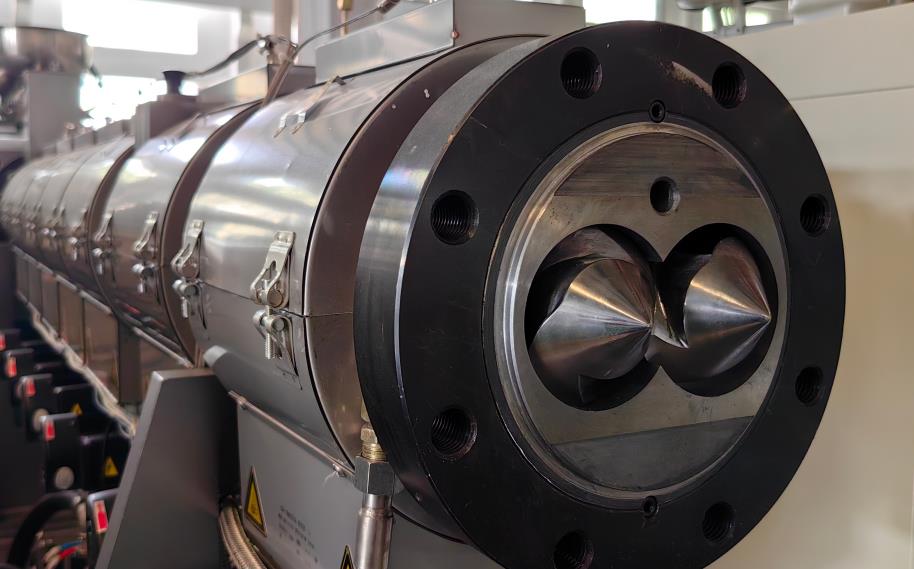
The extrusion system is the core link for melting and pressure-feeding HDPE raw materials. It endures long-term friction and corrosion from high-temperature molten materials. The core wear parts include screws, barrels, screen changers, and heating components.
- Screw: As the core transmission component of the extrusion system, it is responsible for the transportation, compression, and melting of materials. Its flight edges and surface are prone to wear due to material erosion, directly affecting material plasticization effect and output. The price difference mainly depends on the material (ordinary alloy steel, bimetallic alloy) and specifications (adapting to extruder models):
- Ordinary alloy steel single screw: Suitable for small and medium-sized extruders (such as SJ 65/33 model), price range 350-550 USD/piece, minimum order quantity 1 piece;
- Bimetallic alloy coated screw: Suitable for large-scale or high-output production lines, with better wear resistance and corrosion resistance, price range 1200-7800 USD/piece, and the price of some high-end brand products (such as Jwell) can reach 2799-9999 USD/piece;
- Twin-screw elements: Mostly used in modified HDPE pipe production, with relatively low prices, 50-100 USD/piece, minimum order quantity 1 box.
Barrel: Cooperates with the screw to form a closed melting chamber. The inner wall is in direct contact with high-temperature materials, prone to wear and corrosion, and usually needs to be replaced together with the screw. The price range is strongly related to the material and specifications:
- Ordinary single-screw barrel: 350-650 USD/piece, and the unit price can be as low as 650 USD/piece when ordering 10 pieces;
- Bimetallic alloy barrel: 1000-5000 USD/set (matched with screws), and the price of large-scale twin-screw barrels can reach 7824-8346 USD/set.
Hydraulic Screen Changer: Used to filter impurities in molten materials. The screen and sealing components are prone to clogging or wear and need regular replacement. Price range 4347-16519 USD/unit, and the price difference depends on the filtering area and automation level.
Heating Ring/Heating Coil: Provides heating guarantee for the extruder barrel. Long-term high-temperature work is prone to resistance wire aging and insulation layer damage, affecting temperature control accuracy. The price is relatively low, 20-50 USD/piece, with a service life of 1-3 years (about 3000-5000 hours).
Thermocouple: A temperature detection component used to real-time monitor the temperature of the barrel and die head. It is prone to damage due to high-temperature oxidation and mechanical vibration, price 30-80 USD/piece, service life 1-2 years.
(II) Wear Parts of Forming System
The forming system is responsible for processing molten HDPE materials into pipe blanks. The core wear parts are the die head (including die and mandrel) and the seals of the cooling system, which directly affect the dimensional accuracy and surface quality of the pipe.
- HDPE Pipe Extrusion Die Head: Including core components such as die and mandrel. Materials form pipes with specified diameter and wall thickness through the die head. The surface of the die cavity is prone to wear due to material erosion, leading to rough pipe surface or dimensional deviation. The price difference is huge, mainly depending on the pipe diameter adaptation range, precision requirements, and material:
- Small-sized die head (adapting to pipe diameter 20-400mm): 1000-1500 USD/set, and some economical products can be as low as 868-1303 USD/set;
- Medium-sized die head (adapting to pipe diameter 400-1600mm): 22000-24000 USD/set, and the price of customized products can reach 35000-36000 USD/set;
- Large-sized die head (adapting to pipe diameter above 1600mm): Higher price, and the price of some imported brand products exceeds 40000 USD/set.
Sealing Parts: Used for sealing components such as die heads and cooling sleeves to prevent leakage of high-temperature materials or infiltration of cooling water. They are prone to aging and failure under long-term high-temperature environment. The price is low, 0.5-5 USD/piece, service life 0.5-1 year, requiring batch stockpiling.
(III) Wear Parts of Cutting System
The cutting system is responsible for cutting continuously formed HDPE pipes into specified lengths. The core wear parts are cutting blades and blade holders, which directly affect cutting precision and cut flatness.
- Cutting Blade: Divided into cold cutting blades and hot cutting blades. Cold cutting blades are used for cutting pipes at room temperature, and hot cutting blades are used for online cutting of high-temperature pipes. The blade edge is prone to wear and blunting, leading to burrs on the cut or pipe deformation. The price difference depends on the material (high-speed steel, cemented carbide) and cutting pipe diameter:
- Ordinary high-speed steel blade: 0.4-0.5 USD/piece (bulk purchase, minimum order quantity 1000 pieces), and the price of single-machine matching blades is about 30-50 USD/set;
- Cemented carbide blade: Suitable for large-diameter pipes (such as ≥110mm), with higher price. The price of manual cutting machine blades is 2050-2928 USD/piece (unit price 2050 USD for purchasing more than 5 pieces);
- Bimetallic cutter: Used in HDPE granulation link, suitable for high-output units, price about 100-300 USD/piece, service life about 30 days (normal working conditions).
Blade Holder: Supports the blade and ensures cutting stability. It is prone to wear due to blade impact and material friction, price 50-200 USD/piece, needing to be replaced together with the blade.
(IV) Wear Parts of Auxiliary System
The auxiliary system includes feeding system, traction system, pneumatic system, etc. Although the unit price of its wear parts is low, the replacement frequency is high, and the long-term maintenance cost cannot be ignored.
- Feeding Screw/Hopper Liner: Responsible for transporting HDPE granular raw materials to the extruder, prone to wear due to raw material friction, price 100-300 USD/piece, service life about 1 year (batch production working conditions);
- Traction Rubber Wheel: Pulls the formed pipe forward, and the surface is prone to wear due to friction, affecting traction stability, price 200-500 USD/pair, service life 6-12 months;
- Pneumatic Components: Including air throttle valves, quick exhaust valves, air pipes, etc., used to control die head opening and closing, cutting actions, etc., prone to wear due to compressed air impurities or frequent actions:
- Air throttle valve, quick exhaust valve: 30-80 USD/piece, service life 3-5 years (about 1 million actions);
- Pneumatic air pipe (10-12mm specification): 5-15 USD/meter, service life 2-4 years;
- Quick connector: 10-20 USD/piece, service life 3-5 years.
Electrical Control Components: Including solid-state relays, intermediate relays, proximity switches, etc., prone to damage due to high temperature, voltage fluctuations, or electromagnetic interference:
- Solid-state relay, intermediate relay: 20-50 USD/piece, service life 0.5-1 year;
- Proximity switch: 50-100 USD/piece, service life 0.5-1 year.
II. Analysis of Core Influencing Factors of Price Differences
By sorting out the price ranges of the above wear parts, it is found that the price difference of similar parts can reach more than 10 times. The core influencing factors include four dimensions: material performance, specification adaptability, brand and origin, and purchase quantity. The specific analysis is as follows:
(I) Material Performance: Determines the Service Life and Price Basis of Parts
The working environment of HDPE pipe extrusion line is harsh. The material of parts directly affects wear resistance, high-temperature resistance, and corrosion resistance, thereby determining the price level. For example:
- Screw/barrel material: The price of ordinary alloy steel products is 350-650 USD, while the price of bimetallic alloy coated (such as tungsten carbide coating) products can reach 1200-7800 USD. The latter’s wear resistance is improved by 3-5 times, and the service life is extended by 2-3 times;
- Cutting blade material: The unit price of ordinary high-speed steel blades is 0.4-0.5 USD, and the unit price of cemented carbide blades exceeds 2000 USD. Cemented carbide materials can withstand higher cutting temperatures, and the blade wear rate is reduced by more than 80%;
- Sealing part material: The price of ordinary rubber sealing parts is 0.5-2 USD/piece, and the price of high-temperature resistant fluororubber sealing parts is 5-10 USD/piece. The latter can adapt to the high-temperature environment above 200℃ near the die head, and the service life is extended by more than 1 time.
(II) Specification Adaptability: Matching Production Line Capacity and Pipe Parameters
The specifications of parts must be strictly matched with the extruder model, pipe diameter, and production capacity requirements. The larger the specification and the higher the precision requirement, the higher the price. For example:
- HDPE extrusion die head: The price of small-sized die heads adapting to 20-400mm pipe diameter is 1000-1500 USD, while the price of die heads adapting to large-diameter pipes above 1600mm exceeds 35000 USD. The specification is expanded by 4 times, and the price is increased by more than 20 times. The core reason is that large-sized die heads have higher requirements on processing precision and material strength;
- Screw specification: The price of screws adapting to 65mm caliber extruders is 350-550 USD, and the price of screws adapting to 350mm caliber large-scale extruders exceeds 5000 USD. Specification differences directly lead to increased raw material consumption and processing difficulty, and the price increases exponentially.
(III) Brand and Origin: Affect Product Precision and After-Sales Support
Parts of different brands and origins have differences in processing precision, quality control, and after-sales support, which are directly reflected in the price:
- Imported brands vs. Domestic brands: The price of bimetallic screws from imported brands (such as Germany’s CWP, Japan’s Jwell) can reach 2799-9999 USD/piece, and the price of similar domestic brand products is 1200-7800 USD/piece. The price of imported brands is 20%-50% higher, with the core advantage of higher processing precision and longer service life;
- Professional manufacturers vs. General manufacturers: The product prices of manufacturers specializing in HDPE pipe equipment parts (such as Zhoushan Xinlu, Qingdao Comrise) are 10%-30% higher than those of general plastic machinery parts manufacturers, but the parts have better adaptability and wear resistance, which can reduce production failures caused by mismatched parts.
(IV) Purchase Quantity: Significantly Affects the Unit Purchase Cost
Most parts suppliers adopt a tiered pricing strategy. The larger the purchase quantity, the lower the unit price, especially for low-cost standardized parts:
- Cutting blades: The unit price for purchasing 1 piece is 0.5 USD, and the unit price for bulk purchasing more than 1000 pieces can be as low as 0.4 USD, a decrease of 20%;
- Manual cutting machine blades: The unit price for purchasing 1-4 pieces is 2928 USD/piece, and the unit price for purchasing more than 5 pieces drops to 2050 USD/piece, a decrease of 30%;
- Screws/barrels: The unit price for purchasing 1 piece is 550 USD, and the unit price for bulk purchasing more than 10 pieces can be as low as 650 USD/piece (this is the unit price per set, and the total price discount for bulk purchasing is more significant).
III. Cost Control Suggestions
Combined with the price characteristics and influencing factors of wear parts, enterprises can optimize maintenance costs from the following three aspects to balance maintenance quality and cost input:
- Hierarchical Purchase According to the Importance of Parts: For core key parts (such as screws, barrels, die heads), priority should be given to high-quality material products such as bimetallic alloys. Although the initial purchase cost is high, it can extend the service life and reduce downtime losses; for standardized auxiliary parts (such as sealing parts, air pipes, relays), cost-effective domestic brands can be selected, and batch stockpiling can reduce the unit cost.
- Establish Bulk Purchase and Long-Term Cooperation Mechanisms: For parts with high replacement frequency (such as cutting blades, sealing parts, heating rings), sign long-term cooperation agreements with high-quality suppliers to obtain tiered price discounts through bulk purchases, while ensuring the stability of parts supply and avoiding production line downtime caused by parts shortage.
- Strengthen Preventive Maintenance to Extend Part Service Life: Reduce part wear through standardized operations, such as regularly cleaning impurities in the extruder hopper, monitoring the pH value of granule water (maintaining 8-9 to avoid cutter corrosion), and regularly grinding the pelletizer template (once a year). This can extend the service life of high-priced parts such as screws, cutters, and die heads, reduce the replacement frequency, and reduce maintenance costs in the long run.
IV. Summary
The wear parts of HDPE pipe extrusion lines cover extrusion, forming, cutting, and auxiliary systems, with significant price differences, which are mainly affected by material, specification, brand, and purchase quantity. Although high-priced parts (such as bimetallic screws and large die heads) have high initial investment, they can ensure production stability and product quality; low-priced standardized parts (such as sealing parts and relays) need batch stockpiling to control costs. Enterprises need to formulate differentiated parts purchase and maintenance strategies based on production line capacity, product precision requirements, and maintenance budgets to achieve optimal cost control on the premise of ensuring production efficiency.